

Cold Comfort TV
On the unchecked rise of ICE, the resurgence of racial profiling and how – 35 years later – Northern Exposure still represents the best of America

Elaine Miles, a Native American actor best known for her role in Northern Exposure, was subjected to a harrowing encounter with ICE officers in Washington last month. The America I fell in love with – the warm, plural, culturally expansive place the TV series conjured – feels impossibly distant. And nothing underscores that shift more thuggishly than knowing Miles, for years the unflappable heart of a town that welcomed outsiders, was treated as though she didn’t belong at home
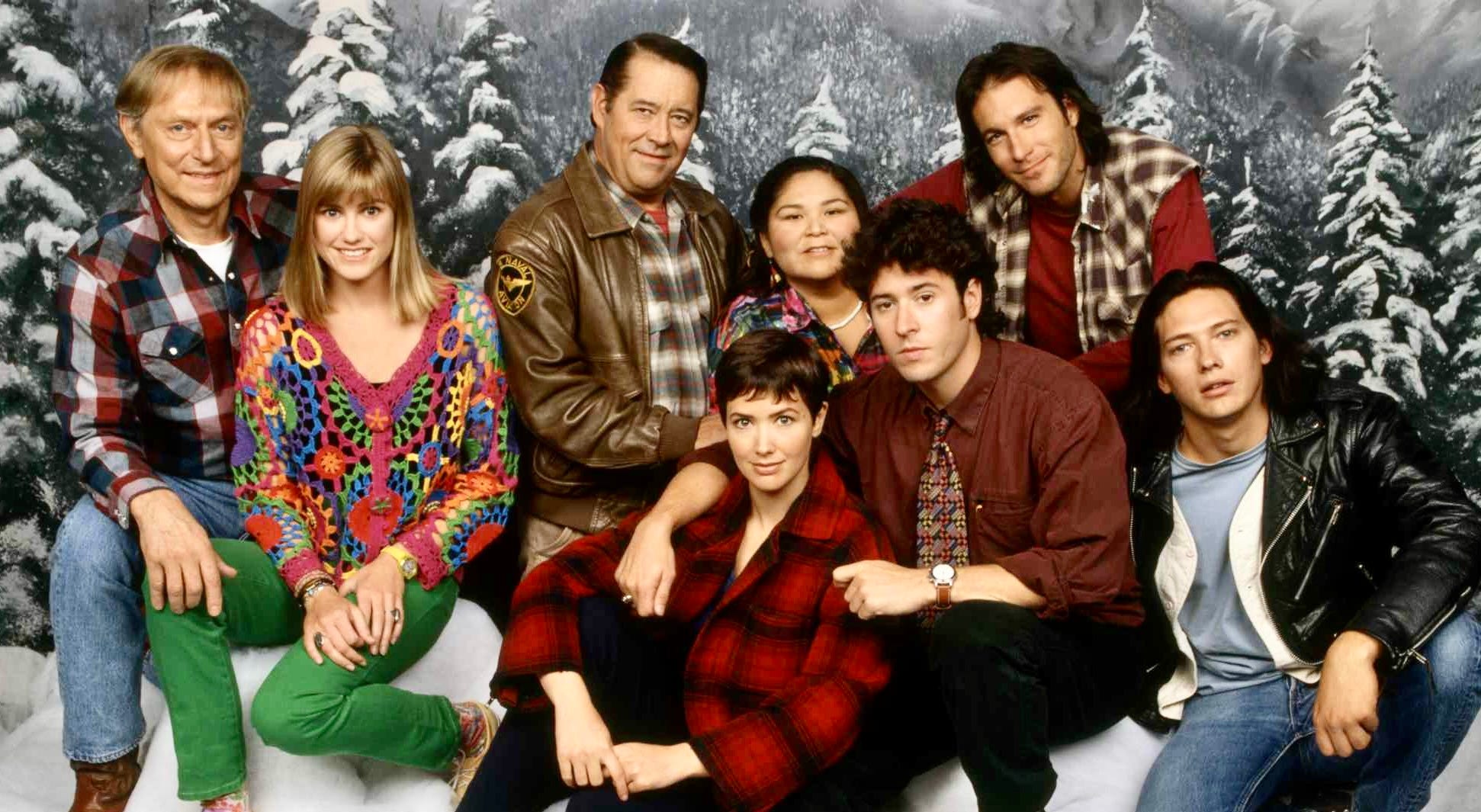
MILES SAYS SHE was ambushed on a street in Redmond, a Seattle suburb, by four masked men in ICE vests who leapt out of unmarked SUVs and demanded to see her papers. Miles produced her tribal ID – issued by the Confederated Tribes of the Umatilla Indian Reservation in Oregon – a federally recognised form of identification she has used to cross borders.
The agents allegedly scoffed, said it looked “fake”, refused to verify it and tried to snatch her phone when she attempted to call her tribe’s enrolment office. Only when a fifth man whistled did the group retreat – leaving her with nothing; no names, no badge numbers, no explanations.
Miles was left shaken and furious – and she’s not alone. Her son and uncle, both U.S. citizens, have been detained in similar fashion. Tribal IDs are lawful proof of citizenship; ICE officers are required to accept them. Yet Native people keep getting treated as “foreigners” in their own land. As Gabriel Galanda, a Seattle-based Indigenous rights attorney, put it: “What we’re talking about here is racial profiling. People are getting pulled over or detained on the street because of the dark colour of their skin”.
Turning impunity into infrastructure
For their part, federal authorities dispute some of Miles’s allegations. The Department of Homeland Security (DHS) assistant secretary Tricia McLaughlin has acknowledged that Miles was briefly stopped on November 3 by ICE agents – but insists that “any claim that ICE questioned her tribal ID” is false.
Calling observers “sceptical” of that denial is newsroom euphemism. Given Miles’s testimony – and its eerie resemblance to countless other accounts – scepticism is the least of it. Most readers will assume, quite rationally, that the agency is evading, obfuscating or simply lying.
ICE is not a “troubled” or “badly supervised” arm of DHS. It is an institution that cannot be trusted to obey the law. Federal judges keep saying so in plain English; so do rights groups. The only people pretending otherwise are the ones running it.
Since Trump’s return in January, the agency has behaved like a force that knows the law is optional. It breaks rules, gets hauled into court, shrugs and carries on until the next injunction. It is disorder in uniform.
The evidence piles up like bodycam footage.
In Chicago, lawyers have gone back to federal court on behalf of 26 people swept up in home, street and workplace raids, arguing that ICE is once again barging in without warrants, in direct breach of a 2022 consent decree that was supposed to stop exactly that – and of the Fourth Amendment itself.
In Colorado, a federal judge has found that ICE officers “routinely” made unlawful warrantless arrests and issued an injunction barring the practice statewide, after evidence that agents were ignoring statutory limits and treating arrest quotas and profiling as a substitute for probable cause.
Around Los Angeles, lawsuits describe workers – including U.S. citizens – grabbed off streets and outside job sites, held without food, water or access to lawyers and subjected to what plaintiffs bluntly call an “unconstitutional siege” on their neighbourhoods.
Courts are not nitpicking paperwork errors here. They are saying, again and again, that ICE is arresting people in ways that are flatly unlawful. And the raids continue until a judge physically wedges a ruling between the agency and the next door it plans to kick in.
Detention is the same story. In San Francisco, a federal judge had to order ICE to overhaul conditions in its holding cells at 630 Sansome Street – windowless concrete rooms kept under bright fluorescent lights, often freezing, filthy, without beds or blankets – calling the conditions “likely punitive” and unconstitutional even for convicted criminals. These are civil detainees who, on paper, are not serving a sentence at all.
Nationally, what were supposed to be short‑term “hold rooms” have become secretive long‑term lock‑ups. In mid‑2025 ICE scrapped its 12‑hour limit and authorised holding people for up to 72 hours. In practice, investigations have uncovered people kept for weeks in these concrete boxes, sleeping on the floor next to a toilet, with no showers, no beds and scant access to lawyers. Courts keep finding violations; ICE keeps seeing how far past the line it can push before the next injunction lands.
Mandatory detention tells the same tale in bolder type. Trump’s summer 2025 policy of jailing virtually everyone in deportation proceedings – no bond, no individualised assessment – has been ruled illegal or unconstitutional by well over 100 federal judges, according to a Politico analysis. DHS is still trying to run the scheme while it appeals. That is not a misunderstanding of the law. It is defiance of it.
The contagion has been able to spread because ICE has learned how to subcontract its worst impulses. Roughly nine in ten people in its custody now sleep in beds owned or run by private prison giants – CoreCivic, GEO Group, LaSalle, MTC – with extensive abuse records.
CoreCivic has told investors that its ICE business is running nearly 55 per cent higher than the same quarter a year earlier, with overall revenue up 18 per cent since Trump’s second term began. GEO, LaSalle and MTC are all reporting bumper immigration profits off the back of new no‑bid detention contracts.
The structure is deliberately opaque: ICE contracts with a county or a U.S. Marshals district; the county subcontracts to a private operator; that operator subcontracts medical care to another private firm. Everyone takes a cut. Responsibility dissolves. Abuse becomes a cost of doing business rather than a scandal that ends it.
Deportation flights, too, have become a business line. Charter companies now bid for ICE contracts the way others bid for holiday routes. Flight attendants hired in Harlingen, Texas, describe doing deportation runs five days a week to Central and South America, shuttling shackled passengers on and off planes whose profitability depends on every seat being filled. In that logic, due process isn’t a safeguard – it’s an inefficiency.
And frontline enforcement is being franchised out through the 287(g) programme. ICE now boasts more than 1,000 agreements with sheriffs and police chiefs across 40 states, deputising local officers with minimal immigration training to act as federal agents. Under a new reimbursement scheme, Washington covers their salaries and pays quarterly bonuses based on how many “removable” immigrants they help ICE locate – a cash incentive structure that all but invites racial profiling.
When law enforcement is paid by the head, lawlessness is the business model.
ICE is no longer just one rogue agency; it is the hub of an expanding deportation machine that pulls in the Pentagon’s aircraft, the Marshals’ and Bureau of Prisons’ cells, county jails, private prison REITs and city councils hungry for federal dollars.
Detention numbers climb past what Congress originally funded, patched over with “emergency” money. Federal appeals courts gut state attempts to ban private immigration jails, ruling that states may not interfere with federal contracts even when their voters try. Budgets swell. Oversight shrivels. Whole towns become economically dependent on cages.
This is how the shadow state becomes self-sustaining: local money, federal power, private profit, zero sunlight.
On with the show
For those of you who haven’t had the pleasure, a Christmas gift: Seoul Mates (season three, episode ten) turns questions of identity and tradition into a trademark meditation on what makes a family and the rituals that bring a community together through winter darkness
The first thing you see is a moose striding down the main street of Cicely, Alaska, placid and faintly comic, such is the nature of the beast (unless he’s in rut). The town looks gently scuffed: brick and clapboard storefronts, low-slung facades and a bar, The Brick, to which every storyline returns, for company, clarity or closure.
Then the theme music fires up: David Schwartz’s mix of chromatic harmonica, accordion, fretless bass and syncopated percussion, a back-porch zydeco-jazz jam that practically cartwheels into every episode.
The premise is deceptively simple. Dr Joel Fleischman (Rob Morrow), a newly minted Columbia graduate from New York, arrives in the remote town of Cicely, Alaska, obliged to repay the state for financing his education. But he soon discovers that he is effectively indentured to Maurice Minnifield (Barry Corbin), a blowhard ex-astronaut with proprietary feelings about the town’s future. That Cicely merely tolerates, rather than endorses its would-be benefactor is a small consolation.
Cicely, “the jewel of the Alaskan Riviera”, never existed, of course. It was rumoured to have been inspired by Talkeetna, Alaska – a tiny town with its own odd traditions, including a Moose Dropping Festival in which alcine turds were dropped from a helicopter onto a target for charity – though the show’s creators have always kept shtum on the matter. What we do know is that Cicely’s exterior charms were played by Roslyn, Washington, which hosts an informal “Moosefest” in late July for fans of the series to spend a few days together.
Northern Exposure ran on CBS for six seasons, from 1990 to 1995, losing its footing only late on after its lead actor left. It began as a summer fill-in but graduated to prime time. On paper, it must have looked like a hungover pitch arriving at the network in clown shoes and a tux, yet Joshua Brand and John Falsey, alumni of St Elsewhere and the civil rights drama I’ll Fly Away, moulded it into one of TV’s most tender portraits of America: an emotionally literate dramedy; part Jungian casebook, part folk atlas.
It may be television, meaning it wasn’t picked out on a dulcimer or whittled from bog oak, but the show belongs in the canon of American vernacular art. Its DNA can be traced back to what the culture critic Greil Marcus calls “the old, weird America”: the half-mythic republic you can hear in Dylan’s Basement Tapes, all boxcars and murder ballads, medicine shows and crossroads hamlets where the past, with nowhere else to go, stays put, picnicking out of its bindle.
But it isn’t a sepia re-enactment. Its sensibility is unmistakably modern: inclusive, progressive and unusually alert, for its time, to the full spectrum of human life. Cicely is an anthology town, in the old, truest sense of the word, edited with the same democratic ear you hear in the Lomaxes’ field recordings. No voice is anointed “official” and everyone – saint, crank, misfit, tourist, Native, newcomer – gets a verse.
In season three, episode 23, the town’s founding myth is laid out: Cicely was transformed from a frontier outpost into a “Paris of the North” – a bohemian artists’ colony – by Cicely and Roslyn, a lesbian couple who arrived in the early 20th century, having flown the conservatism of Montana.
The show also staged one of the earliest same-sex weddings on U.S. television – in 1994, long before Obergefell v. Hodges mandated legal recognition nationwide – and granted the couple the same narrative weight and licence it afforded its straight characters.
Elaine Miles’s casting was serendipitous – she went along to an audition with her mother and was spotted waiting in the lobby – yet her performance as Marilyn Whirlwind became one of Northern Exposure’s load-bearing presences. In her silences, side-eyes and internal smirks, the show finds its centre of gravity.
As Fleischman’s Alaska Native (Tlingit) receptionist, she was the first Native American woman to be a regular cast member on a network television series, serving as his shtiler froy – a buffer against his constant kvetching and metropolitan fret.
Miles is only the most visible part of a broader Native ensemble that informs the show’s worldview. Although Marilyn is sometimes written through a time-tarnished lens of inscrutable authority – Reservation Dogs was three decades away – Northern Exposure gives her, along with figures such as the shaman Leonard Quinhagak (Graham Greene) and the spirit guide One-Who-Waits (Floyd Westerman), roles that challenge assumptions about knowledge and who gets to hold it.
The same sensibility underpins the show’s engagement with myth, psychology and magical realism. Northern Exposure pairs character-driven drama with dream logic, and when it brushes against the surreal or fantastical it never does so at the expense of emotional coherence.
Much of this feels as Indigenous as it does European or Western: visions have authority, spirits appear without frantic rationalisation and the land is an active presence. Enlightenment romanticism in a parka, then, but one that embraces faith in all its forms, a world in which Catholic chasubles, Jewish tallitot, Ravenstail robes and the vestments of secular certainty flutter companionably on its washing lines.
Nothing less than a fall from grace
The expansion of ICE has turned much of the country into a low-grade checkpoint regime: workplaces raided, homes surveilled, communities destabilised by the constant threat of removal. Racial profiling is a design feature of that system, a way of sorting bodies at speed and at scale.
It flattens people into categories, suspicions and risk assessments, rewarding fear over familiarity, force over curiosity. In that sense, it is the precise inverse of Northern Exposure, a show that imagined America not as a machine for exclusion but as a loose, eccentric commons where difference is ordinary, even welcome, and where community is something you build rather than police.
Watching it now, the contrast lands viscerally. ICE turns strangers into suspects; Northern Exposure converts them into neighbours. One is the sharp end of American power, the other the soft, stubborn hope of its imagination – a version of the nation that trusts people to show up as they are, and trusts communities to make room for them.
Happy Christmas, Chag Sameach, Sigóowu Kíswas, Mali Kishmish…
The Northern Exposure contrast is sharp and effective here. What makes Elaine Miles' story particularly grim is how triball IDs being rejected reveals the circularity of the logic, people indigenous to this land treated as foreign because enforcement has quotas to meet. The piece captures how ICE has moved from enforcement agency to profit-generating infrastructure with its own momentum.
If the government actually wanted to get rid of undocumented workers in order to force capitalists to pay workers appropriately, all they'd have to do is start arresting CEOs of companies that rely on undocumented labor. Just one or two behind bars and you'd see every enterprise in the US scrambling to get legal.